In the evolving Higher Education and EdTech landscape, compliance, data governance, and cybersecurity are often perceived as tedious bureaucratic hurdles—a checklist meant solely to satisfy IT security or legal procurement teams. However, as educational institutions rapidly integrate Artificial Intelligence and data-driven tools into their digital ecosystems, compliance has shifted from an administrative requirement into a core strategic driver.
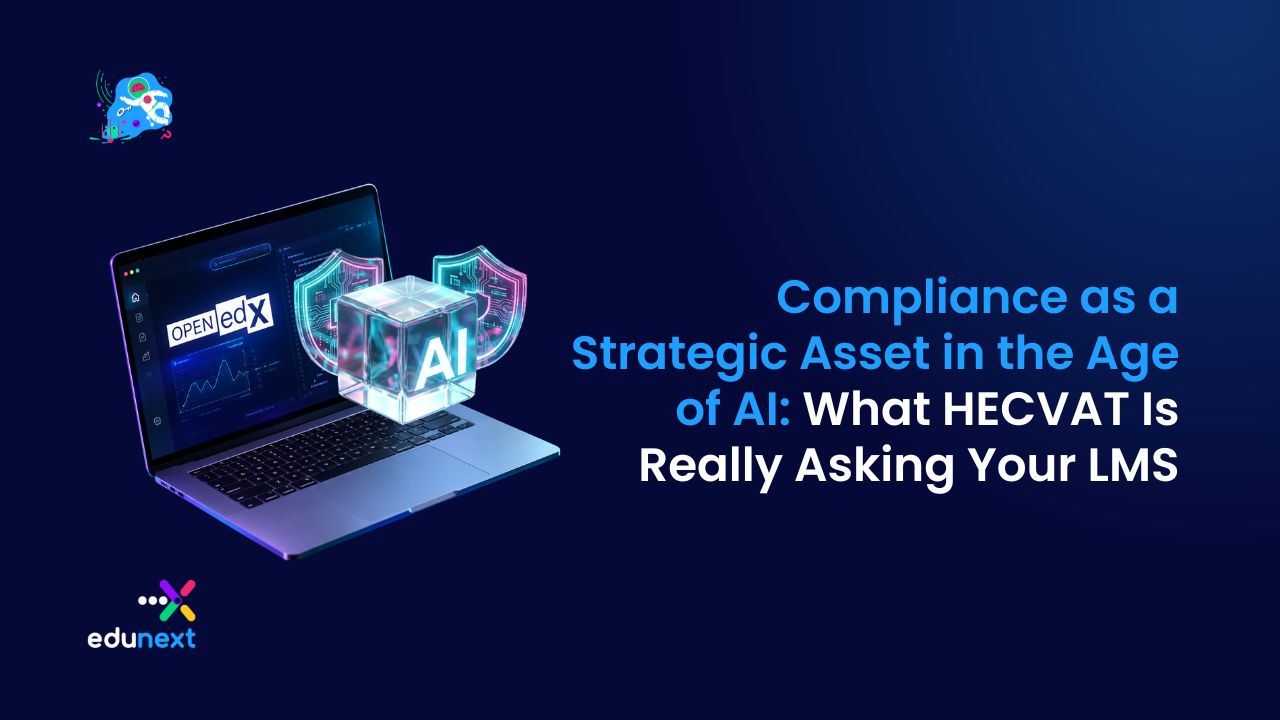
In his Open edX® Conference 2026 presentation, “Compliance in the Age of AI: What HECVAT Is Really Asking,” Juan Camilo Montoya addresses the essential shift from treating compliance as an afterthought to embracing it as a foundation for security, trust, and sustainable innovation in online learning.
The Paradigm Shift: Why LMS Compliance Matters More Than Ever
For years, learning management systems were primarily evaluated on user interface, feature availability, and pricing. Today, as institutions process massive amounts of sensitive student data, video streams, grades, and intellectual property, the focus has shifted dramatically toward data sovereignty, infrastructure resilience, and regulatory compliance.
As AI tools analyze learner behavior, grade assignments, and offer personalized tutoring, data privacy and algorithmic transparency are no longer optional. When an LMS ingests personal and institutional data to feed automated or AI-assisted models, compliance frameworks act as the safeguard ensuring that sensitive information remains secure and uncompromised.
Deconstructing HECVAT: Beyond the Checklist

A central focus of Montoya’s talk is the Higher Education Community Vendor Assessment Tool (HECVAT)—the industry standard created by EDUCAUSE to measure vendor risk in higher education cloud services.
Rather than viewing HECVAT as a massive list of repetitive questions, Juan Camilo reframes it around what the framework is really trying to uncover:
- Data Governance & Privacy: Where does learner data reside, who owns it, how is it processed, and can it be safely removed or migrated?
- Infrastructure & Architectural Security: Is the underlying cloud architecture resilient against modern cyber threats, unauthorized access, and continuous vulnerabilities?
- Operational Continuity & Incident Response: Does the vendor or operating partner have defined Service Level Agreements (SLAs), recovery objectives (RTO/RPO), and rapid zero-day patch capabilities to handle disruptions?
- AI & Emerging Tech Integration: How are third-party integrations (XBlocks, LTI tools, AI plugins) governed to ensure they don’t introduce hidden security flaws or unauthorized data-sharing channels?
When higher education institutions evaluate Open edX instances, HECVAT serves as the lens through which they assess whether an LMS setup is truly enterprise-ready.
The Open Source Advantage & The Managed Hosting Reality

One of Open edX’s major advantages is its open-source philosophy, which offers complete platform ownership, customizability, and code transparency. However, as Montoya emphasizes, open-source software code itself is only part of the compliance equation.
Running a compliant, high-security Open edX platform requires robust operational infrastructure, continuous monitoring, and specialized DevOps capabilities:
- Infrastructure Resilience: Compliance demands isolated namespaces, high-availability databases (such as MySQL, MongoDB, Clickhouse), and automated autoscaling capable of handling heavy concurrent user loads while protecting performance integrity.
- Proactive Security & Patching: Meeting stringent compliance standards requires fast remediation—applying critical zero-day security patches within 24 hours of vendor release and maintaining strict encryption standards (TLS 1.2+ in transit and KMS at rest).
- Disaster Recovery & Data Sovereignty: Educational organizations must ensure complete control over their database backups, maintaining short Recovery Time Objectives (RTO) and Recovery Point Objectives (RPO), alongside clear offboarding protocols that prevent vendor lock-in.
This is where the distinction between maintaining a self-managed server and partnering with a specialized managed partner becomes crucial. Managed hosting models—such as edunext Hosting —and specialized consultative services (edg·on™) bridge the gap between raw open-source flexibility and the strict compliance demands of modern institutions.
Moving from Reactive Compliance to Strategic Partnership
As LMS ecosystems become more interconnected through AI tools, external APIs, and custom integrations, institutions cannot rely on a static security review conducted once every few years. Security and compliance are dynamic operational processes that demand continuous auditing, vulnerability management, and expert oversight.
By embedding compliance into platform architecture from day one, organizations gain much more than risk mitigation—they establish a trusted foundation that allows educators and learners to adopt cutting-edge AI technologies with complete confidence.
Ready to Ensure Compliance Across Your Open edX Ecosystem?
Navigating HECVAT audits, data sovereignty requirements, and AI security standards doesn’t have to slow down your educational mission. At edunext, we combine over a decade of deep Open edX expertise with managed infrastructure and specialized consulting to keep your platform secure, scalable, and fully compliant.
Whether you need a fully managed cloud setup built to enterprise standards or strategic guidance to navigate technical compliance, we are here to be your partner of choice.
👉 Contact edunext today to learn how we can help you turn LMS compliance and security into a strategic advantage for your organization.
Watch the Full Conference Talk
To dive deeper into Juan Camilo Montoya’s insights on HECVAT, AI governance, and building secure Open edX environments, watch the full session from the Open edX Conference: