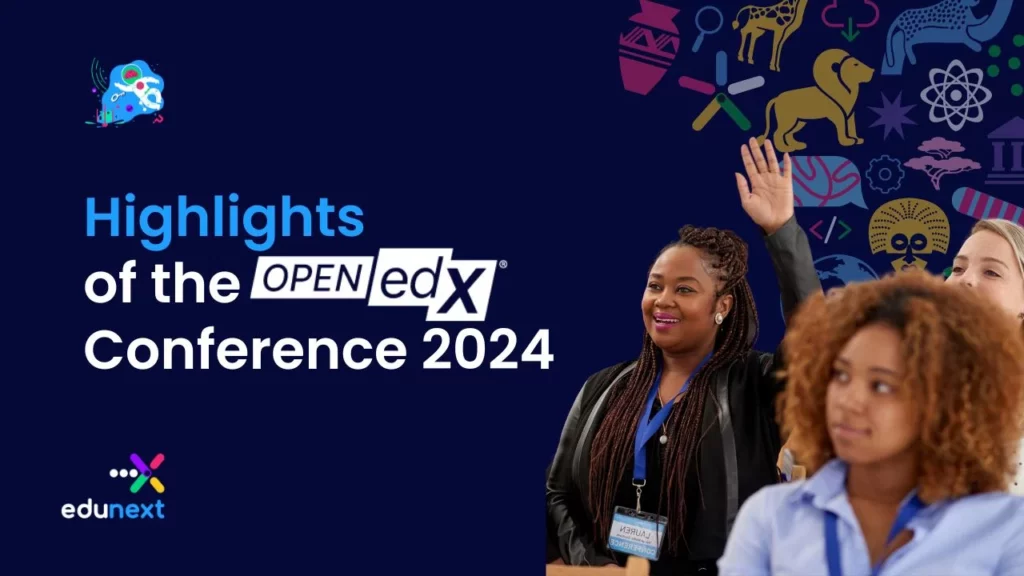
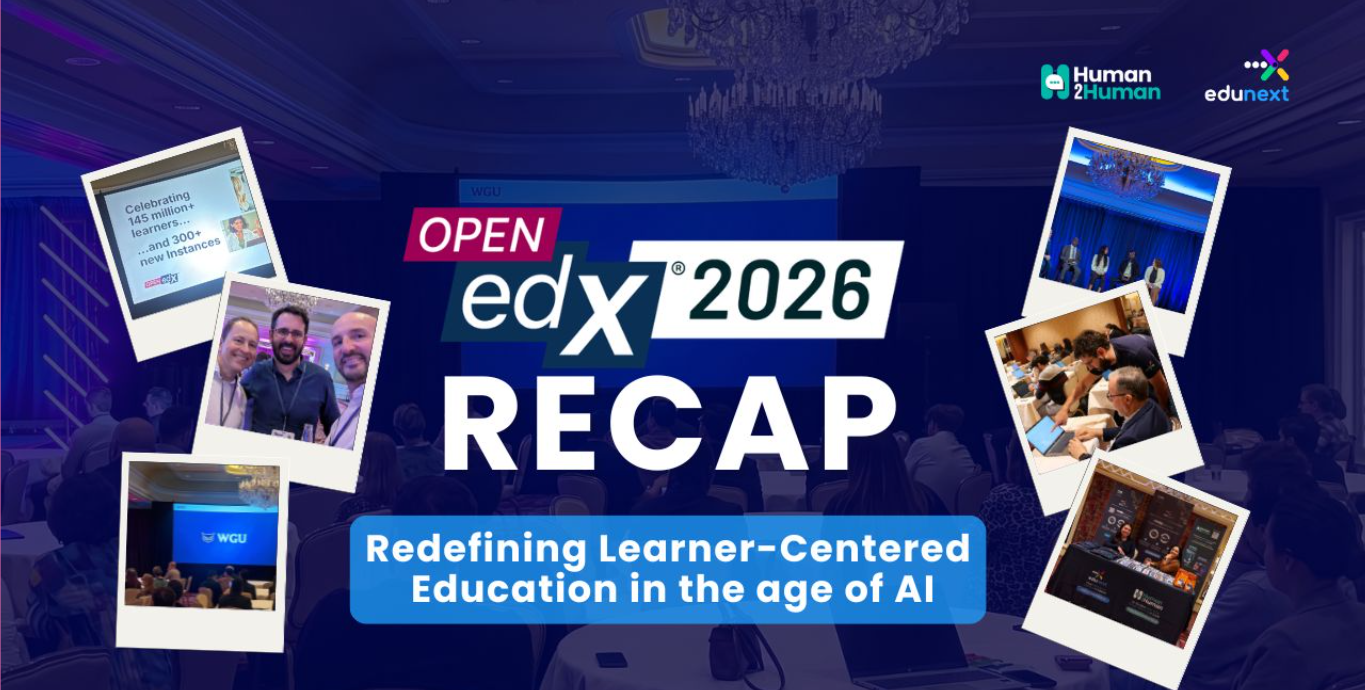
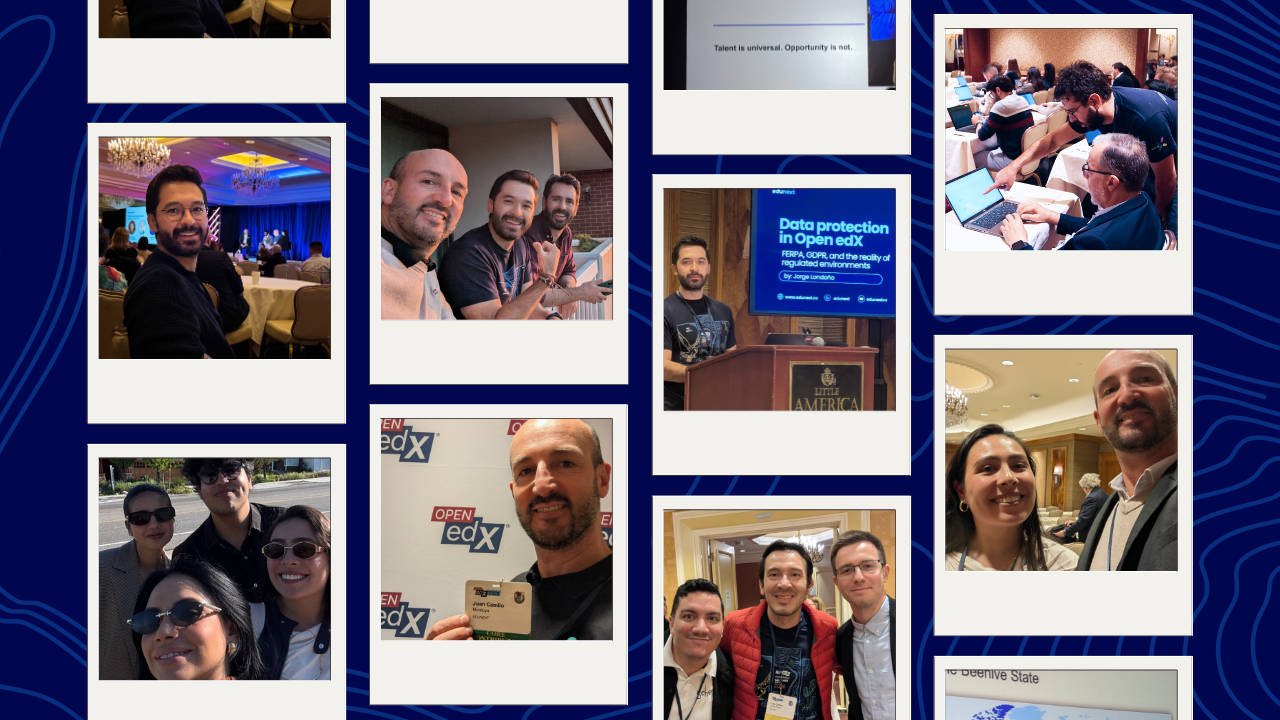
There is a unique energy that comes with the annual pilgrimage of the Open edX community. Gathering in Salt Lake City for the Open edX 2026 conference felt less like a standard industry checkpoint and more like a pivotal reunion. For us at edunext, this is our anchor point in the year—a vital opportunity to reconnect with our partners at Axim Collaborative, swap insights with fellow developers and operators, and align our collective visions for the future of open source digital learning.
This year felt somewhat distinct, and much of that credit goes to our host, Western Governors University (WGU). For the first time, our community was hosted by a pioneer in fully online, at-scale education. WGU represents the first mission-aligned organization (MAO) to lead the way in this new era of Axim Collaborative’s democratized governance. Having them set the tone felt entirely appropriate for where the platform needs to go next.
This week was also a profound testament to the incredible drive and passion of the edunext team. We traveled to Salt Lake City with a delegation of eight people—which, outside of a few US-based organizations, made us one of the largest delegations at the conference. We delivered nine distinct sessions—spanning workshops, technical presentations, and lightning talks. Watching every single member of our team give 200% of themselves throughout this demanding week was inspiring, and I am enormously grateful for their dedication, energy, and collaborative spirit.
The Multi-Layered Challenge of Competency-Based Education
Everyone in higher education is talking about skills-first and competency-based education (CBE). It The Multi-Layered Challenge of Competency-Based Educationis a massive, growing trend both in the US and internationally. But as a community, we are moving past the initial hype and grappling with the hard reality: capturing the value of CBE is incredibly complex. True competency-based learning requires an entirely new architecture that frames the traditional learning experience between different vital layers:
The skills and competencies Layer: Competencies require a robust foundation rooted in open standards and deeply integrated with established competency and skills catalogs, mapping competencies and skills directly to the learning content. This is highly challenging, especially at scale and in the multi-stakeholder environments where this happens.
The credentials Layer: We must look beyond the static course completion certificate. The modern learner requires verifiable credentials, digital portfolios, and portable, stackable badges that they own and can carry natively into the workforce.
The learning pathways layer: This layer introduces the essential flexibility learners deserve. Rather than locking everyone into a rigid, predetermined curriculum, it enables each student to dynamically define their own optimal route from the skills they already possess to the collection of skills they aim to achieve.
Integrating these layers seamlessly with learning offerings is the only way for institutions to effectively tackle the pressing economic and career challenges of higher education today. However, we must also face a practical reality check: while development is happening across all of these fronts, community efforts can sometimes be disjointed. What one organization builds is not always immediately compatible with what another is working on. Resolving these alignment gaps remains an active challenge—one we often end up addressing in second or third development cycles. While we get there eventually, this delayed convergence is less than optimal for an ecosystem that needs to move fast.
Aligning the Vision with the Technology
It was inspiring to see how multiple institutions in the ecosystem are collaborating to tackle this shift. This was exemplified during the Friday State of Open edX presentation, where several initiatives for implementing these layers were highlighted.
During the panel “Expanding the Human Possibility Frontier: Student Learning and Success Amplified at Scale”, we could sample the interplay between the education strategy and the technology development. After the panelists shared their valuable perspectives and visions, I asked them a critical question: How does this educational vision translate into technology? Do tech fundamentals like scale, extensibility, open standards, and interoperability actually matter to you on the ground? The answer was a resounding yes. But the panelists went a step further, emphasizing that tech providers must also prioritize frictionless data access for real-time decision-making and rich, social learning experiences. It was a deeply validating moment for edunext; the structural priorities we champion as a provider are exactly what top-tier institutions need to drive student success.
From Content Warehouse to AI Orchestrator (With Guardrails)
Perhaps the most personally rewarding takeaway from the conference was witnessing the explosive momentum behind AI Extensibility. Just one year ago, at the 2025 conference in Paris, the edunext team proposed this conceptual framework. Today, it is a fully realized operational framework, with multiple active features, and a massive appetite from the community to build further.
This marks a profound paradigm shift: we are transitioning away from a world where the primary value of an LMS was to act as a centralized, passive container for static content, and into a future where the LMS is evolving into an intelligent orchestrator of increasingly complex, multi-layered AI services designed to dynamically support, assess, and guide the learning process.
However, rapid innovation without guardrails is a liability. While edunext is fundamentally committed to a human-centric approach to AI, scaling these powerful technologies safely means directly addressing the critical friction points of data privacy, security, and regulatory compliance. During my Wednesday lightning talk on “Compliance in the Age of AI”, I discussed how large-scale institutions and governments can navigate these challenges—ensuring that true innovation is not just fast, but secure, equitable, and sustainable.
Walking the Talk: Turning Conversations into Commitments
In open source, leadership isn’t defined by what you present on stage, but by what you commit to building alongside the community. To turn our discussions in Salt Lake City into tangible progress, edunext is proud to highlight five ways we are translating these insights into action:
The Universal Mobile App: We are partnering with the team at Raccoon Gang to actively push the agenda for the Universal Mobile App for the Open edX platform. Our shared goal is to radically lower the barrier to entry, enabling any Open edX instance to deliver a premium, native iOS and Android experience at no extra cost.
The Adoption Sandbox: We have committed to providing and maintaining fully featured, dedicated Open edX instances for select partners, giving them a powerful, risk-free environment to showcase their content offerings, demonstrate the latest features, and champion the adoption of the platform globally.
Leading Meaningful AI Development: We will continue taking a leadership role in developing AI-driven educational tools that make authentic sense for learning projects. Guided by our “human-in-the-loop” philosophy, we build solutions that keep educators in the driver’s seat, giving them the ultimate control to review, select, and decide which AI outputs to accept, refine, or reject.
Sustaining Enterprise Infrastructure: Beyond new features, we are dedicated to supporting the plumbing that keeps large-scale operations running. edunext continues to provide constant, reliable support to the operational tools necessary for massive deployment—namely Harmony, Picasso, and Drydock. Our team’s presentation on Aspects at Scale proved that with these tools, we can successfully scale instances to tens of millions of events per day. This successfully delivers on a critical promise made to the community two to three years ago: that Aspects is not only a viable analytics model but is fully scalable and backed by highly reliable data.
Pioneering AI-Era Security Policies: In open source, critical changes often start with informal hallway tracks. During the conference, we actively shared our hands-on experiences navigating recent security vulnerabilities developed or assisted by AI. This collaborative discussion quickly gained traction and successfully translated into an immediate policy change for the Open edX project: activating immutable releases to raise the baseline security bar and protect every single instance in our global ecosystem.
The Road Ahead
Open edX 2026 proved that our ecosystem is healthy, democratic, and structurally ready for what’s next.
The transition from a course-based repository to a learner-centric, AI-orchestrated ecosystem is underway. Let’s build it together.
Whether you joined us in Salt Lake City or are navigating these transformations in your own institution, how do you see the shift toward learner-centric, AI-orchestrated education unfolding in your work? Let’s discuss in the comments below!
#OpenedX #EdTech #AIinEducation #HigherEducation #CompetencyBasedEducation #edunext