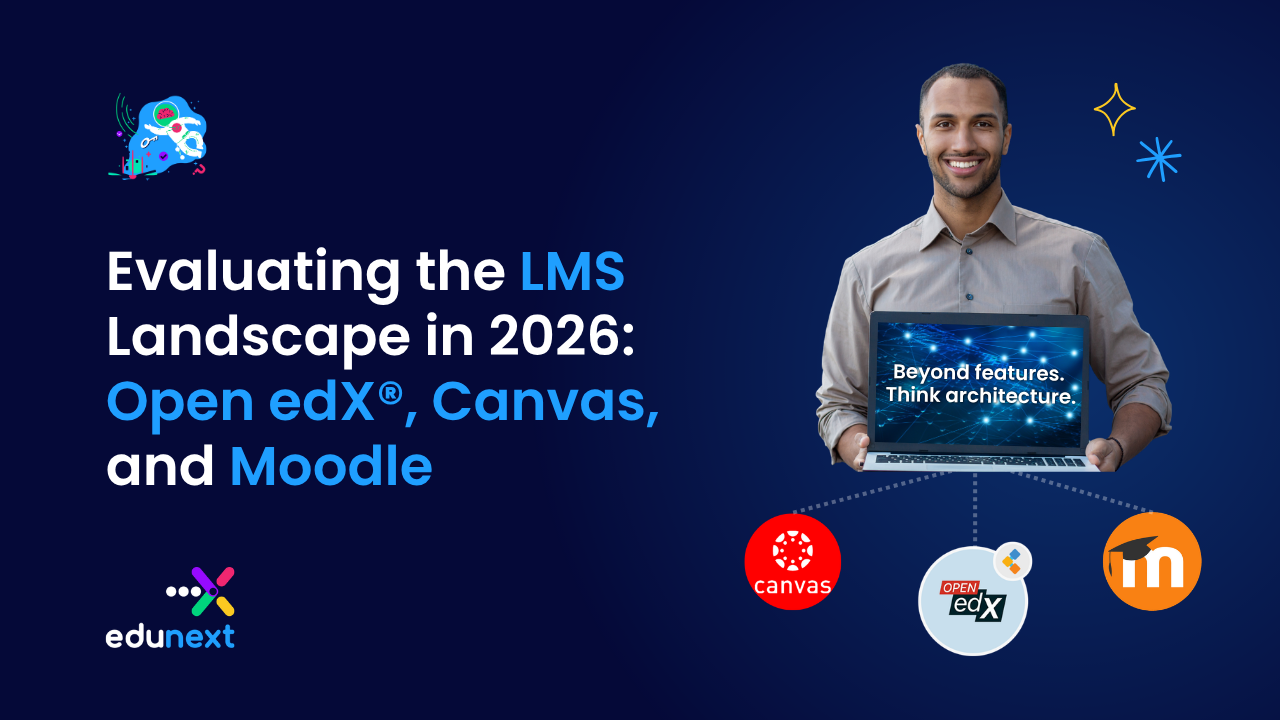
Selecting a Learning Management System (LMS) is no longer just about delivering digital content or organizing online quizzes—it’s about defining your institution’s long-term digital architecture. As we navigate 2026, educational institutions, corporations, and governments are prioritizing ownership, data sovereignty, AI integration, and long-term sustainability over superficial feature lists.
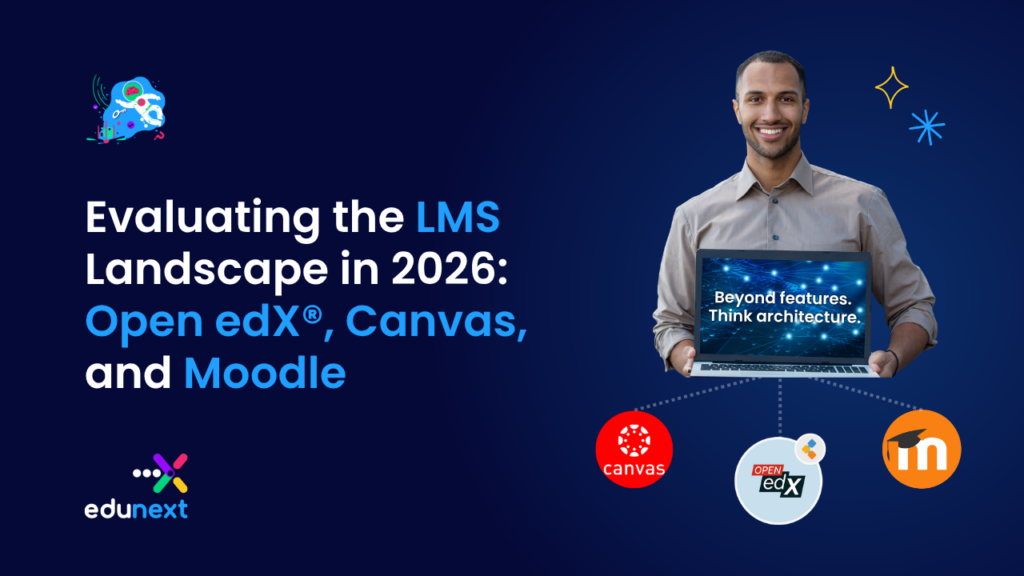
Three platforms continue to dominate global discussions: Canvas, Moodle, and Open edX®. While each ecosystem excels in specific environments, understanding where they differ in business model, flexibility, and architectural scale is essential for choosing a future-proof solution.
Understanding the Big Three
1. Canvas: The Turnkey SaaS Powerhouse
Canvas, developed by Instructure, remains a favorite across K-12 and traditional higher education due to its polished user experience and low initial friction.
- The Strengths: Canvas delivers an intuitive interface out of the box, requiring minimal technical onboarding for instructors and students. Its vendor-managed SaaS model ensures seamless automatic updates and predictable day-to-day administrative overhead.
- The Reality: Canvas operates on a proprietary, closed-vendor framework. Customization is bound strictly to standard LTI integrations and APIs; you cannot alter core platform behavior, modify underlying workflows, or deeply tailor the UX. Furthermore, subscription costs follow vendor-driven scaling models, creating financial unpredictability as student enrollments grow.
2. Moodle: The Community-Driven Classic
As one of the earliest open-source LMS solutions, Moodle holds a legacy position across thousands of traditional academic programs worldwide.
- The Strengths: Moodle offers complete open-source transparency, zero licensing fees, and a vast ecosystem of community-contributed plugins. It is particularly effective for classroom-style course management, structured grading, and traditional assignment workflows.
- The Reality: Moodle was architected around a legacy, course-by-course paradigm. When scaled to tens of thousands of concurrent learners, managing platform performance, complex multi-tenancy, and plugin stability demands heavy IT intervention. Its user experience can feel fragmented across different plugin configurations and mobile environments.
3. Open edX: Built for Scale, Deep Learning, and Autonomy
Originally created by Harvard and MIT and now stewarded by the non-profit Axim Collaborative, the Open edX platform represents modern, scalable learning architecture.
- The Strengths: Open edX is engineered specifically for active learning, deep engagement, and massive global scale. It provides robust native course authoring (Studio), advanced micro-learning and video interaction capabilities, and real-time analytics powered by Open edX Aspects. Because it is fully open-source, institutions maintain 100% data sovereignty, full access to source code, and complete control over their branding, custom development, and infrastructure.
- The Reality: The sheer technical power and architectural sophistication of Open edX mean that self-hosting demands specialized DevOps expertise, Kubernetes orchestration, and active platform maintenance.
Strategic Comparison at a Glance
| Strategic Dimension | Canvas LMS | Moodle LMS | Open edX Platform |
| Software Model | Commercial Proprietary SaaS | Open Source (GPL) | Open Source (Aferro GPL) |
| Core Architecture | Vendor-managed multi-tenant cloud | Traditional PHP / Relational DB | Cloud-native, micro-frontends, Kubernetes |
| Customization Depth | Surface-level (LTI / APIs only) | High (via local plugins) | Unlimited (Core source, XBlocks, EOX) |
| Scalability & Performance | Vendor-managed scaling | Complex at massive enterprise scale | Native high-concurrency architecture |
| Data & Analytics Ownership | Vendor-controlled reporting | Standard local database queries | Complete sovereignty (Open edX Aspects) |
| Long-Term Cost Model | Escalating per-user licenses | Low software cost; high maintenance | Zero licensing fees; controllable infrastructure |
Why Open edX Wins for Growth-Oriented Organizations
While Canvas fits institutions seeking a standard off-the-shelf software subscription and Moodle serves traditional classroom administration, Open edX stands out as the ultimate foundation for organizations building scalable, future-ready learning initiatives.
Whether delivering national education initiatives (such as Portugal’s NAU or Spain’s UniDigital), scaling higher-education degree programs (such as WGU), or powering global corporate platforms (like Pearson), Open edX ensures you never hit a ceiling on growth, branding, or feature capabilities.
Unlocking Open edX without Technical Friction: The edunext Partnership

The primary challenge of adopting Open edX has historically been managing its underlying technical infrastructure. This is where edunext transforms the platform’s technical complexity into your strategic advantage.
As a specialized, global Open edX partner with over a decade of dedicated expertise, edunext bridges the gap between open-source freedom and enterprise reliability. We eliminate the technical burden so you can focus entirely on delivering world-class learning experiences.
- Fully Managed Cloud Hosting: Through our Edunext Cloud offerings, we provide fully managed, autoscaling Kubernetes infrastructure on AWS, backed by rigorous SLAs (up to 99.9% uptime), proactive security patching, automated backups, and integrated Open edX Aspects analytics dashboards.
- Deep Strategic Consulting (edg·on™): Whether you require custom XBlock development, complex data migrations, third-party system integrations, or smooth version upgrades, our edg·on™ consulting framework guides your initiative from initial diagnostic analysis to long-term success.
- True Strategic Partnership: Unlike generic cloud providers or rigid SaaS vendors, edunext serves as an extended technology partner. We offer transparent pricing, customizable engagement models, and dedicated escalation support—ensuring your platform continuously evolves alongside your organizational goals.
The combination of Open edX’s open, scalable technology and edunext’s managed hosting and specialized consultancy gives institutions the flexibility and sovereignty of open source, backed by the reliability and peace of mind of an experienced Open edX partner.
If you’re exploring what this could look like for your institution, talk to our team at sales@edunext.co.