Every growing academy hits the same inflection point.
You start with a boutique vision—a specific pedagogical model, a distinct voice, and a curriculum crafted to solve a real skill gap. But as learner numbers climb from hundreds to tens of thousands, the tech stack quietly begins to dictate the business model.
In the pursuit of speed, many training organizations take the familiar path: a turnkey SaaS LMS. At first, it feels like momentum. A credit card swipe, an out-of-the-box template, and courses are live by Friday.
Then comes year two.
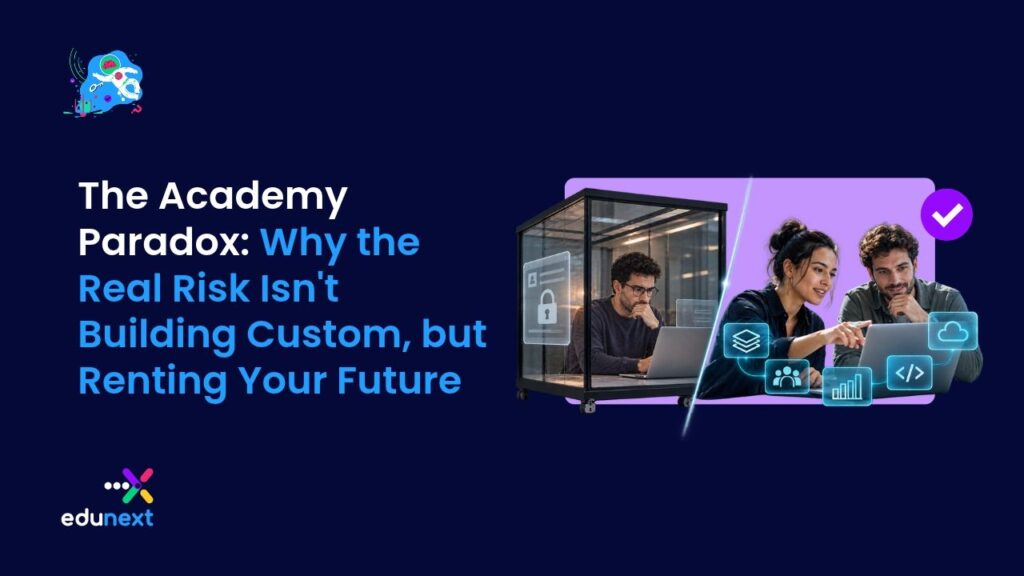
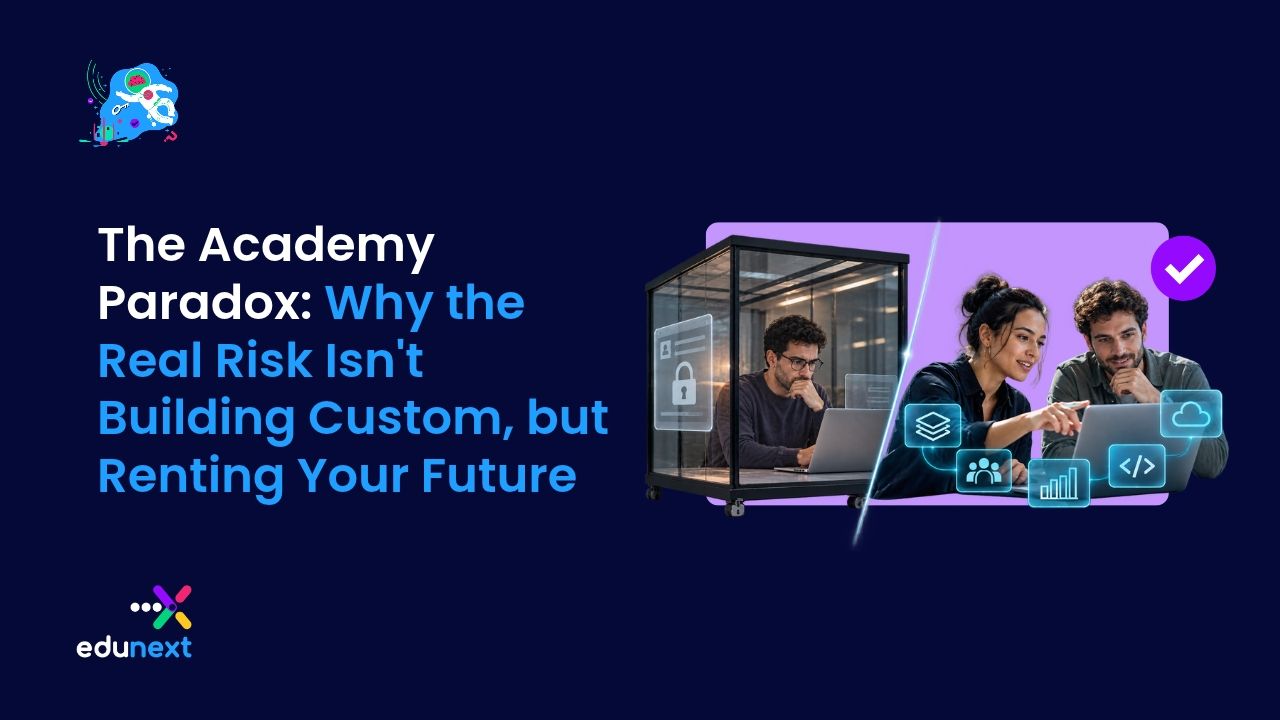
You want to bundle a cohort experience with specialized interactive coding widgets, but your platform’s API won’t allow custom frontend behaviors. You negotiate a massive B2B corporate upskilling contract, only to realize the SaaS vendor bills you on a punitive per-seat model that wipes out your operating margin. You want to audit deep learner engagement paths, but the vendor only exports aggregate CSVs with surface-level metrics. Worst of all, your brand ends up trapped inside someone else’s container, where your students are essentially renting space in another company’s database.
This is the hidden tax of modern EdTech: organizations trade technological sovereignty for short-term convenience.

Escaping the Feature Monopoly
When you build an academy on closed software, your roadmap is at the mercy of a third-party product manager who has never taught your students or met your clients.
Open edX flips that dynamic entirely.
Conceived by Harvard and MIT and backed by a global ecosystem of engineers, institutions, and learning scientists, Open edX was never designed as a lightweight course-hosting widget. It was architected from day one as high-performance academic infrastructure:
- Unconstrained Pedagogical Design: Through modular learning components (XBlocks) and flexible Micro-Frontends (MFEs), an academy isn’t limited to standard multiple-choice quizzes and video players. You can integrate live proctoring, interactive simulations, custom labs, SCORM packages, and adaptive learning paths without asking a vendor for permission.
- True Multi-Tenancy for B2B Growth: Expanding an academy often means selling training directly to enterprise clients or institutional partners. Open edX enables soft multitenancy and composable theming, letting you deploy distinct, branded microsites for corporate cohorts under a single platform instance.
- Deep Learning Analytics with Aspects: Instead of generic completion checkboxes, the native Aspects analytics framework (powered by ClickHouse and OpenTelemetry) gives academic directors forensic insight into drop-off points, problem attempts, video engagement, and mastery patterns.
The Misconception: “Open Source Means an Internal DevOps Nightmare”
For years, the hesitation around open source wasn’t about its capabilities; it was about the operational burden. Academies exist to educate, curate instructors, and build market authority. They do not exist to maintain Kubernetes clusters, configure Redis caches, or patch database vulnerabilities at 2 AM.
This false binary—either buy closed SaaS and lose control, or deploy open source and drown in DevOps—is obsolete.
The modern paradigm for serious academies is managed cloud hosting coupled with specialized ecosystem consulting.
Through fully managed environments like edunext Cloud (EC) or Your Cloud (YC), academies get enterprise-grade Open edX deployments backed by production-hardened Kubernetes architectures, high-availability data layers, and automated autoscaling. You retain full data sovereignty—ownership of your relational databases, learner records, and configuration repositories—without having to hire an in-house infrastructure team.
When strategic differentiation is required—such as building proprietary extensions, executing complex platform migrations, or integrating external enterprise systems—a dedicated partner like edg·on™ Consulting steps in to handle the software engineering.
You get the agility of SaaS with the uncompromised ownership of open-source software.
Building on Digital Commons
An academy’s value is cumulative. It lives in your proprietary learning frameworks, your learner relationships, and your institutional reputation. Storing that equity on proprietary infrastructure is building your house on rented land.
When you invest in Open edX, you build on a global digital common. Every enhancement you make, every cohort you scale, and every data point you analyze remains strictly yours. If your business model shifts, the platform adapts with you—not the other way around.
Online academies don’t scale by behaving like generic course distributors. They scale by delivering transformative learning experiences on technology they truly own.
Planning the next chapter of your academy’s growth?
Whether you are looking to escape SaaS seat-tax constraints, deploy high-availability managed infrastructure, or build custom learning architectures on Open edX, you don’t have to navigate it alone.
Book a discovery meeting with our team to discuss your technical roadmap, evaluate your platform needs, and explore how a strategic partnership can protect your long-term independence.